Overview
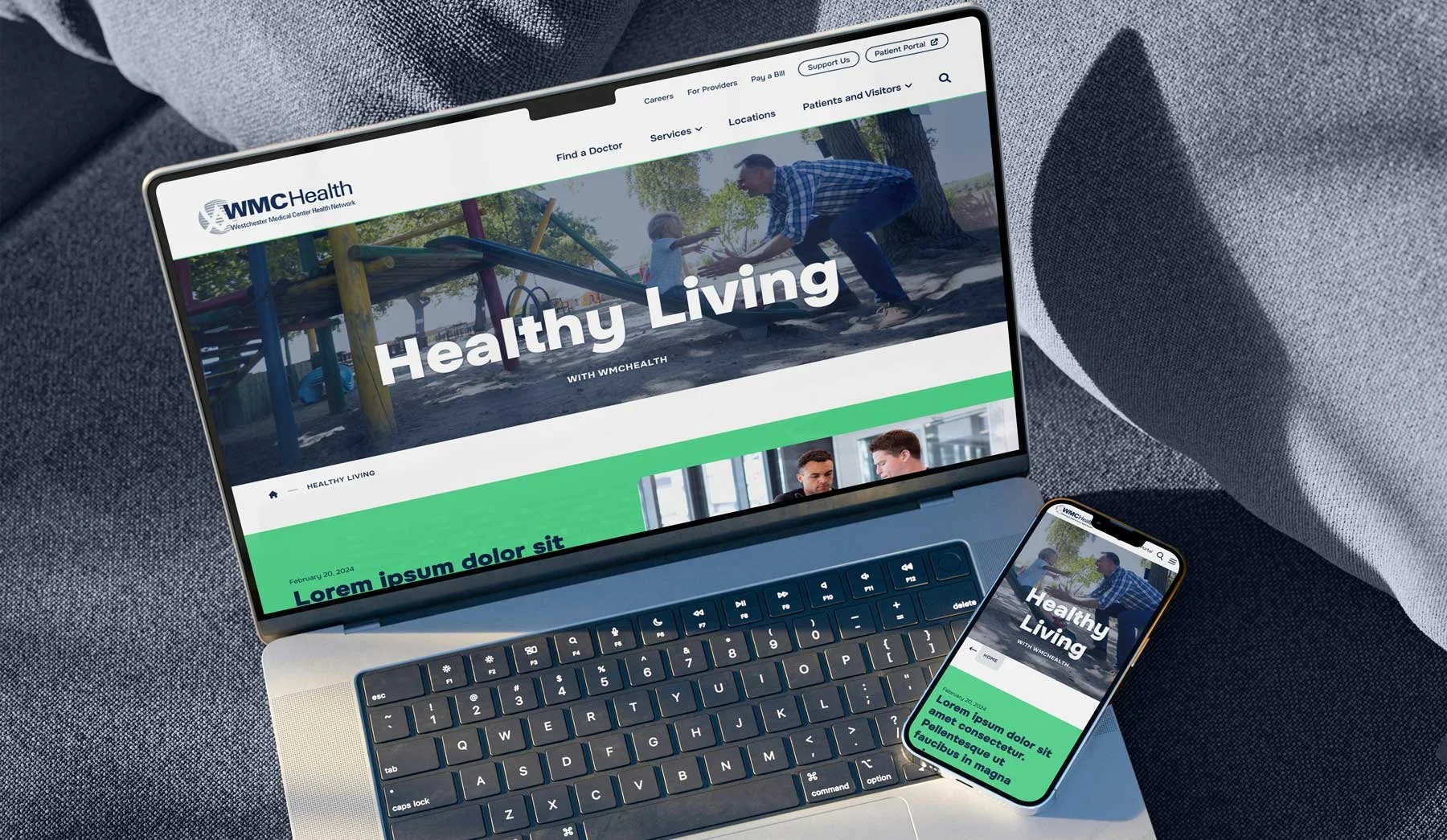
WMCHealth is a cutting-edge academic health system serving New York State and beyond. However, the health system's original web presence was fragmented due to outdated hospital-specific designs and a clunky CMS, negatively impacting user engagement and experience.
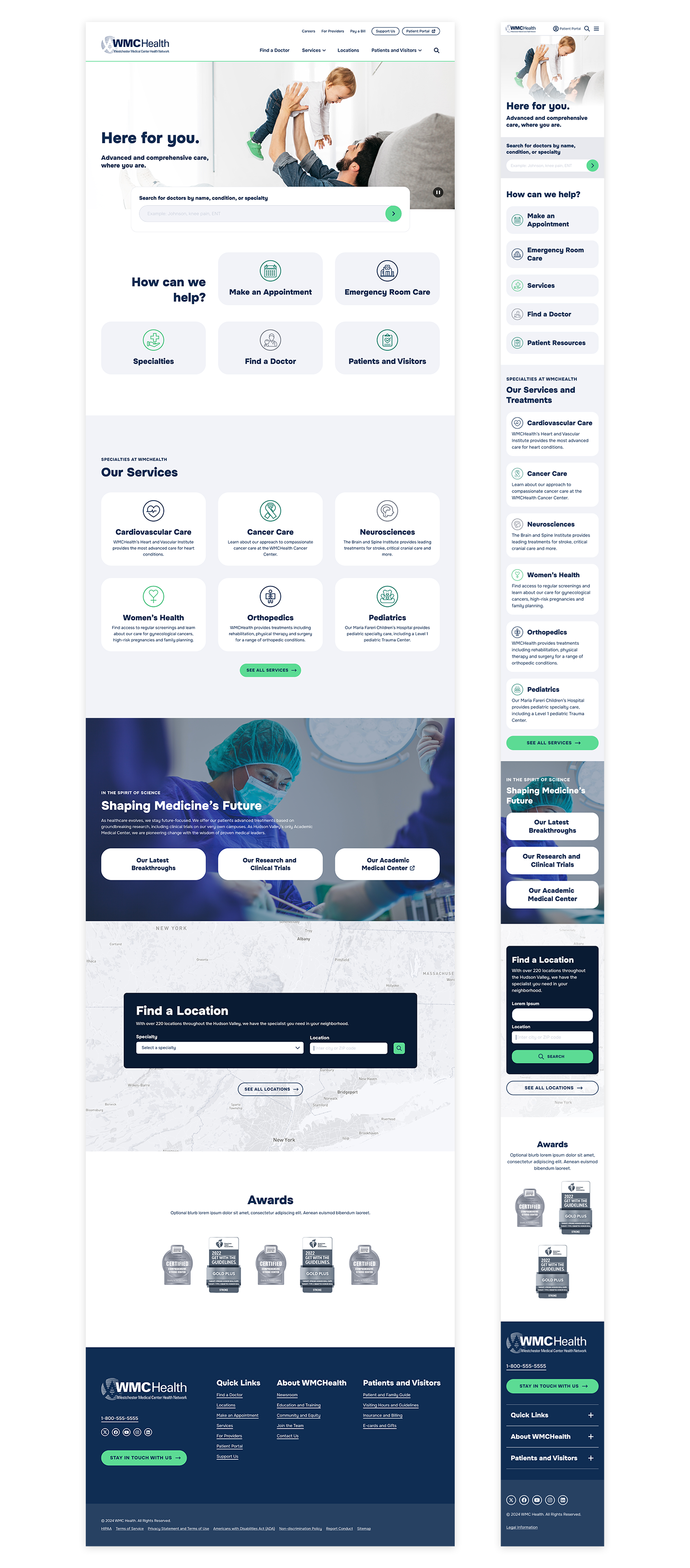
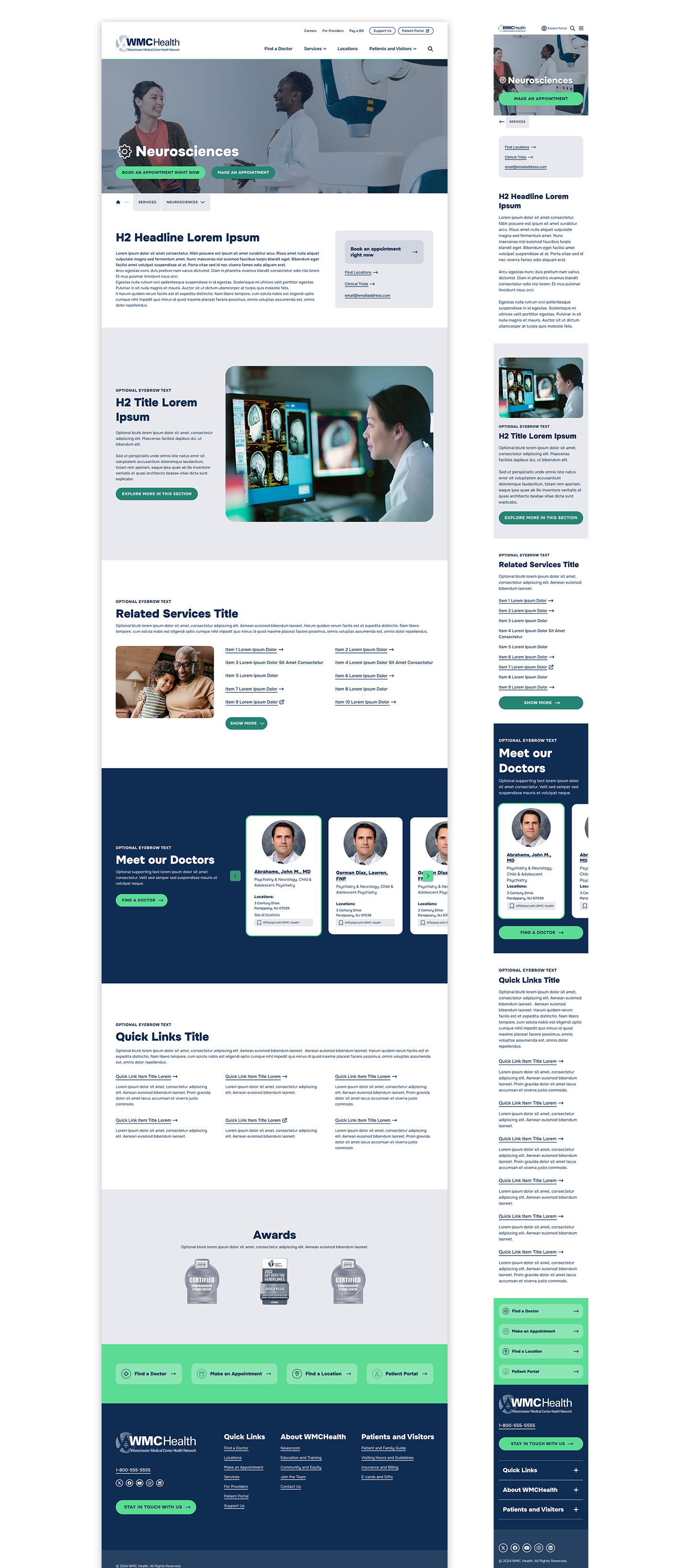
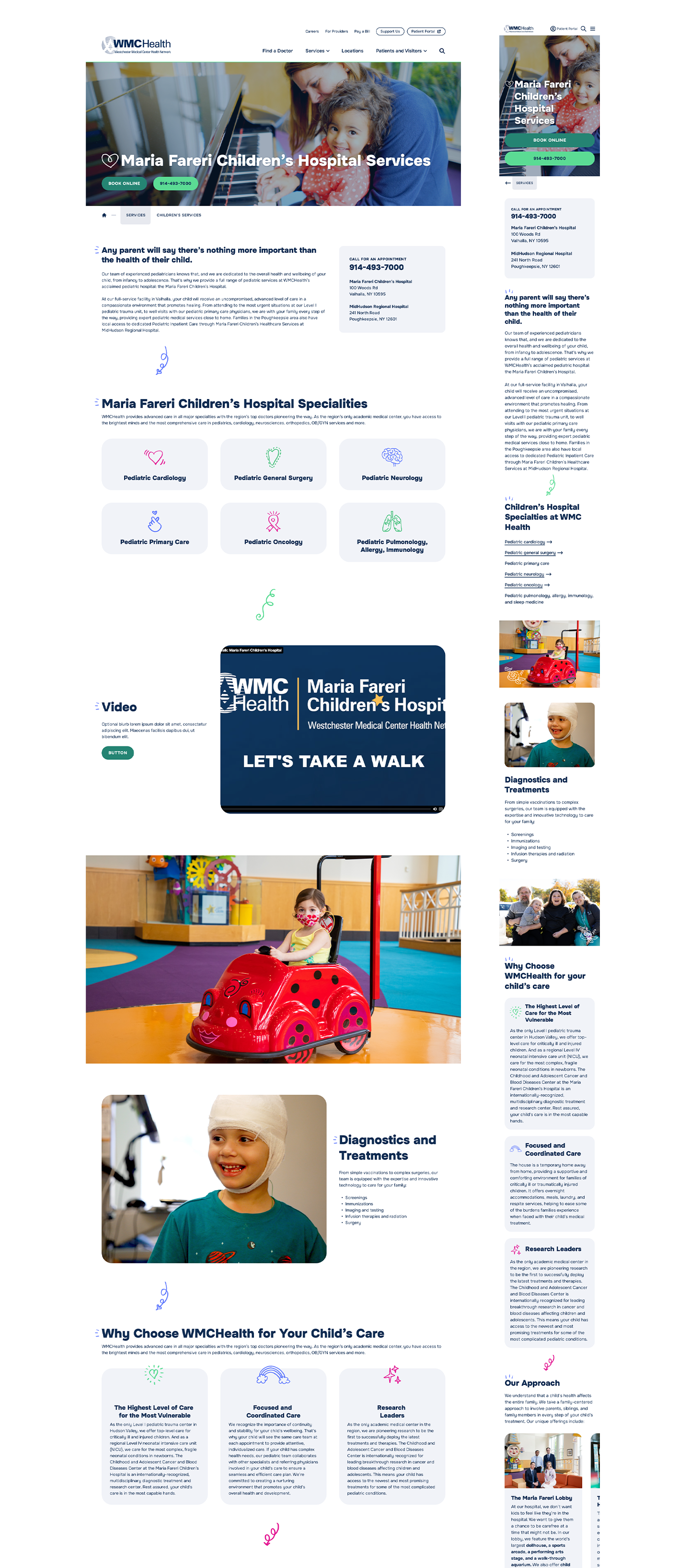
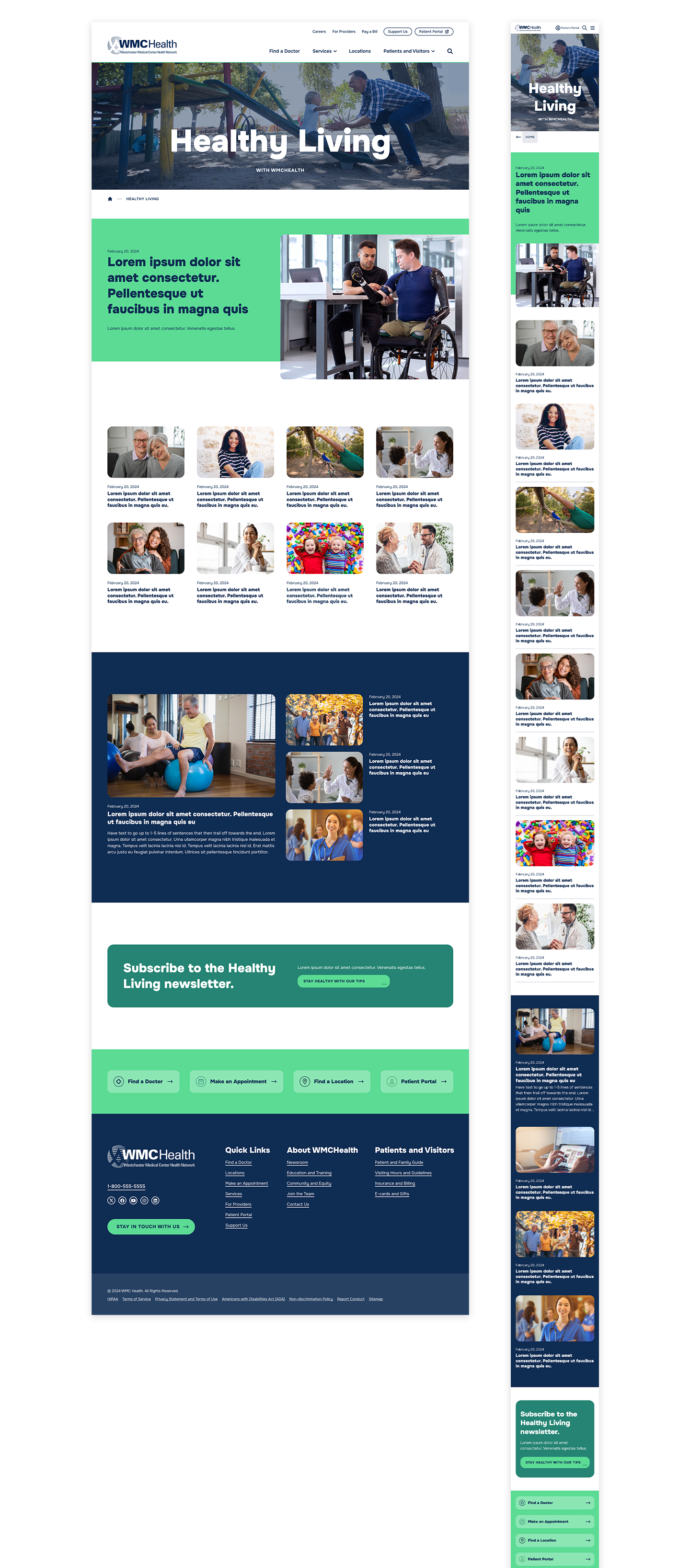
To address these challenges, my team created a new design aesthetic, comprehensive design system, and UX and UI overhaul of their website. Our work spanned the product design lifecycle, from wireframing to content entry and QA.
Role: UX Director
Look and feel/light branding
Design system
UI design
Prototyping
Design documentation & QA
Challenges
One key challenge was designing a new website while a broader rebranding effort was ongoing. The UI needed to align with the existing brand but also modernize its visual identity. Additionally, the website required a scalable, component-based design system to support hundreds of pages and multiple page types.
Research & UX Foundation
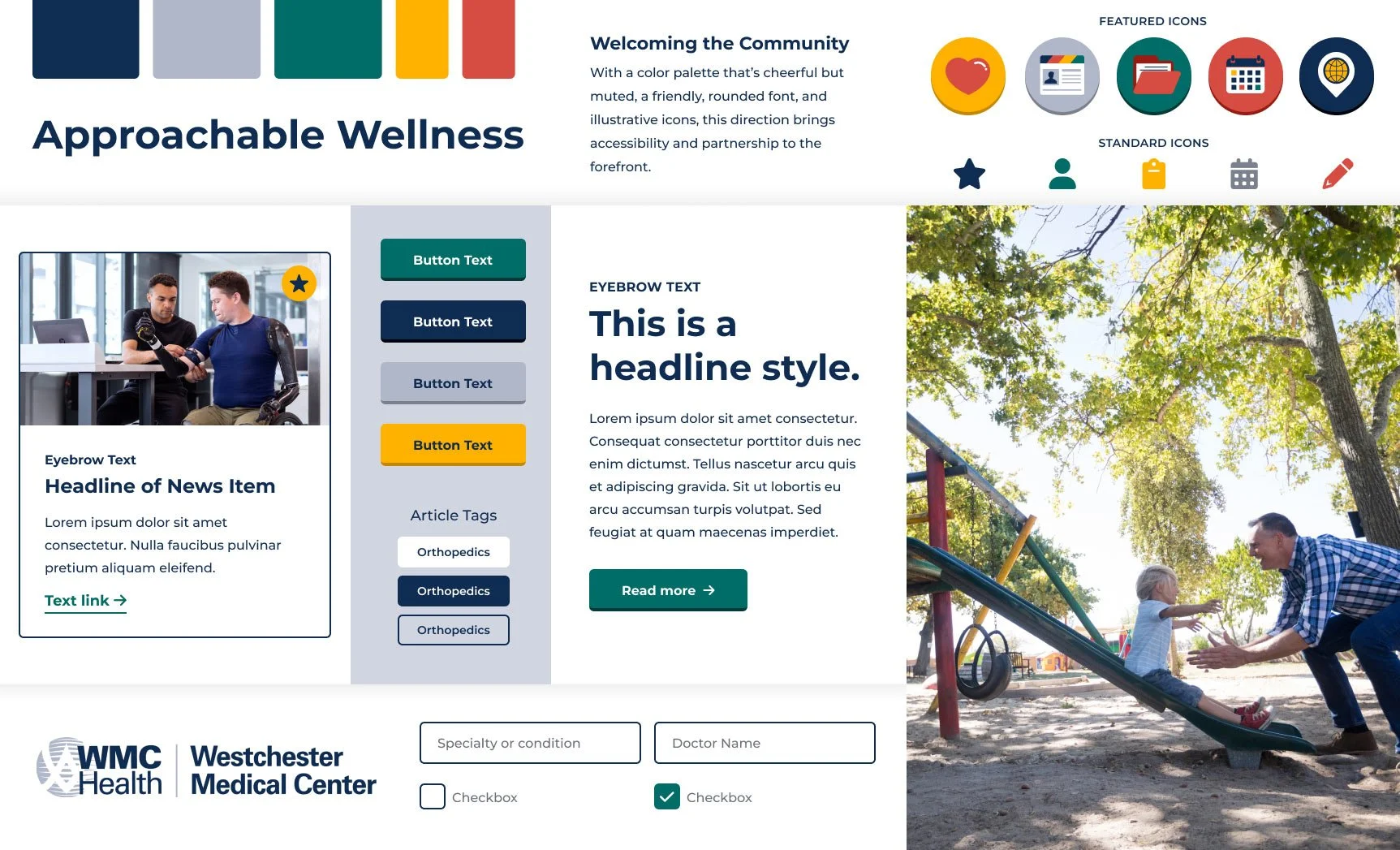
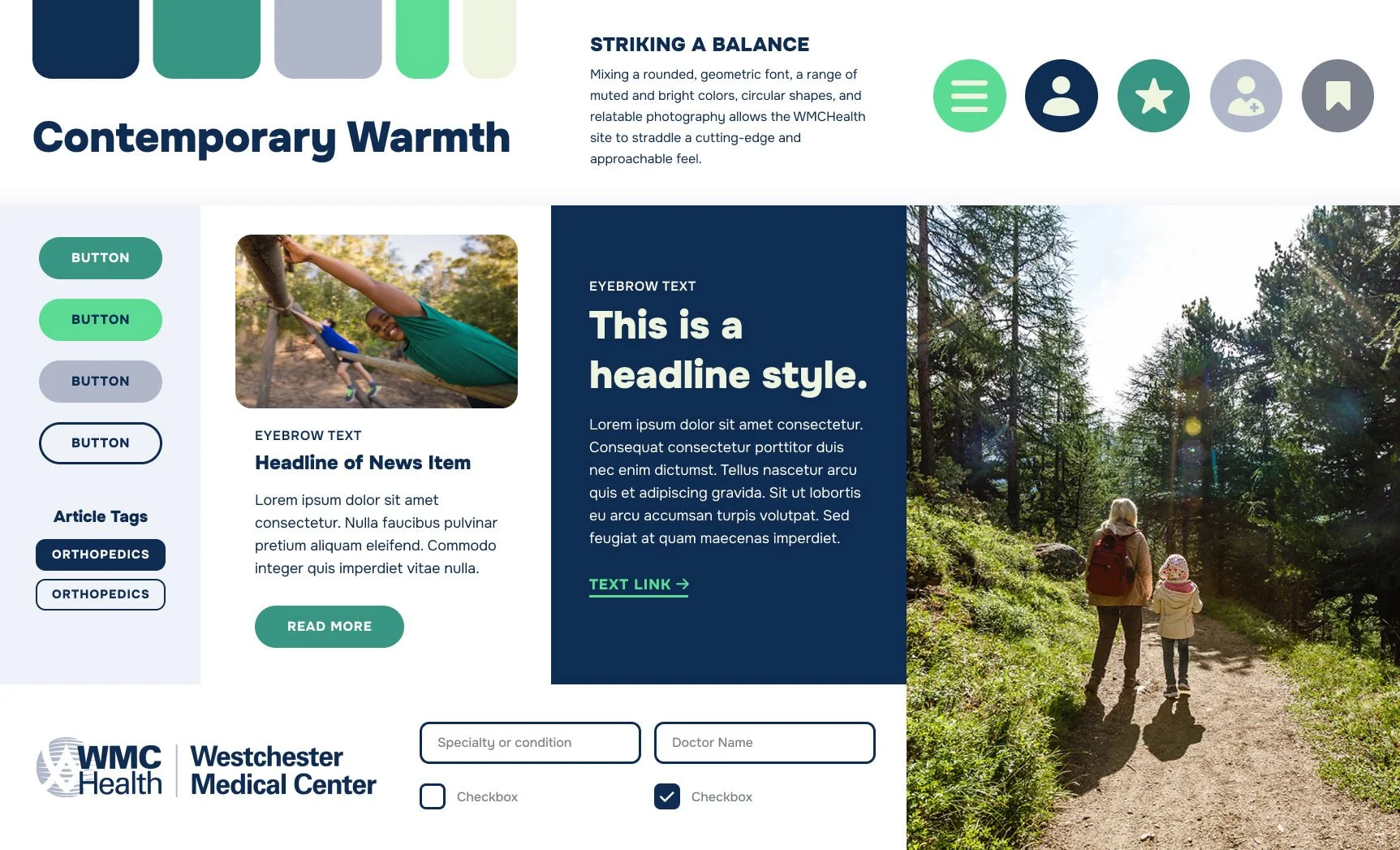
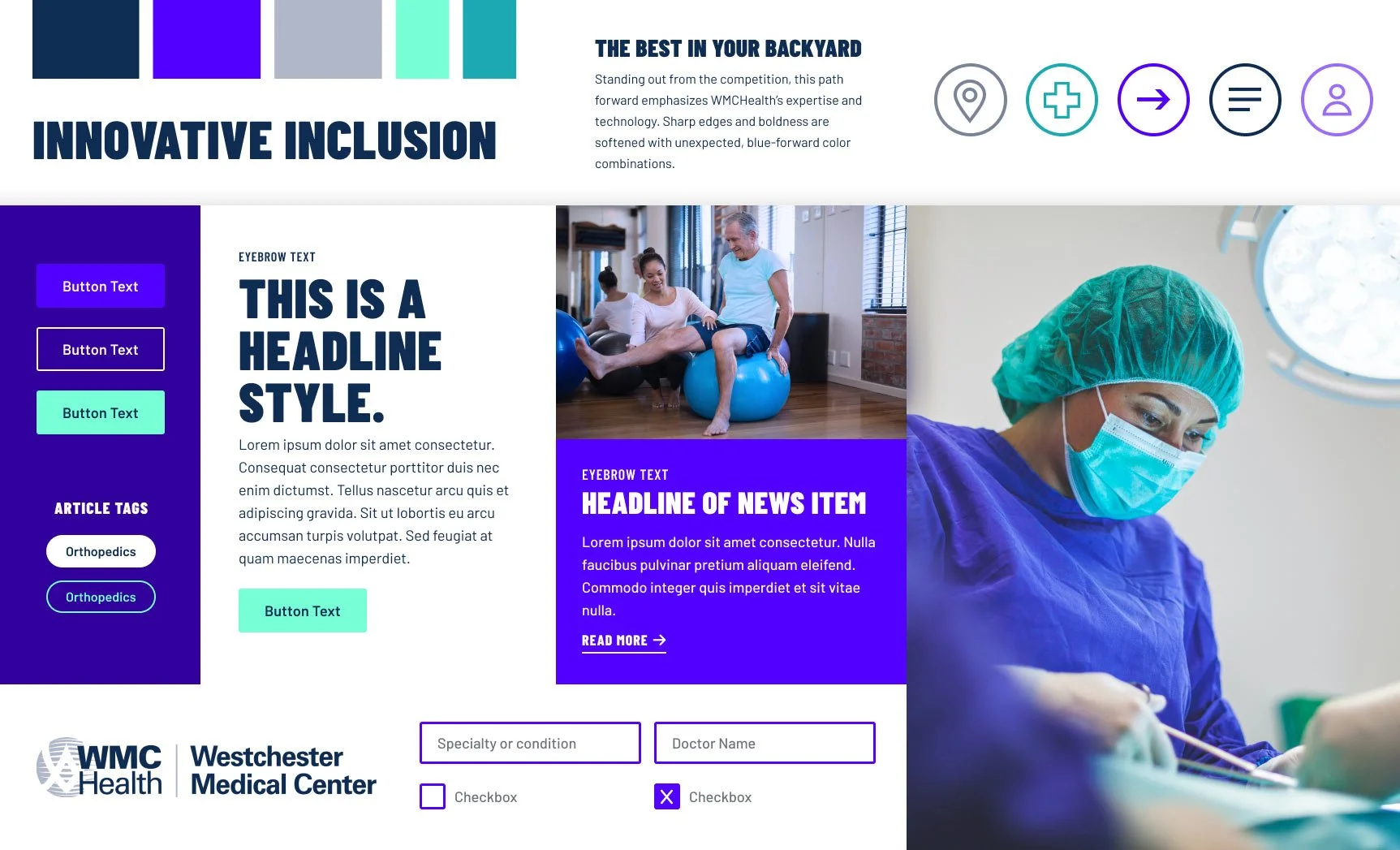
To inform the design, we conducted stakeholder interviews to define an interim brand personality and performed a competitor analysis. These insights led to three distinct design directions, with the client selecting the "Contemporary Warmth" approach. This direction balanced familiarity with an updated, inviting aesthetic.
Design Process
Throughout the agile design and development process, my team worked iteratively on a robust design system for the WMC Health website. We first set up developers with basic styles and variables, then created atoms, molecules, organisms, and corresponding page templates to support numerous page types. Each component contained detailed design requirements and documentation to preemptively answer questions that front-end developers might have and set them up for success.
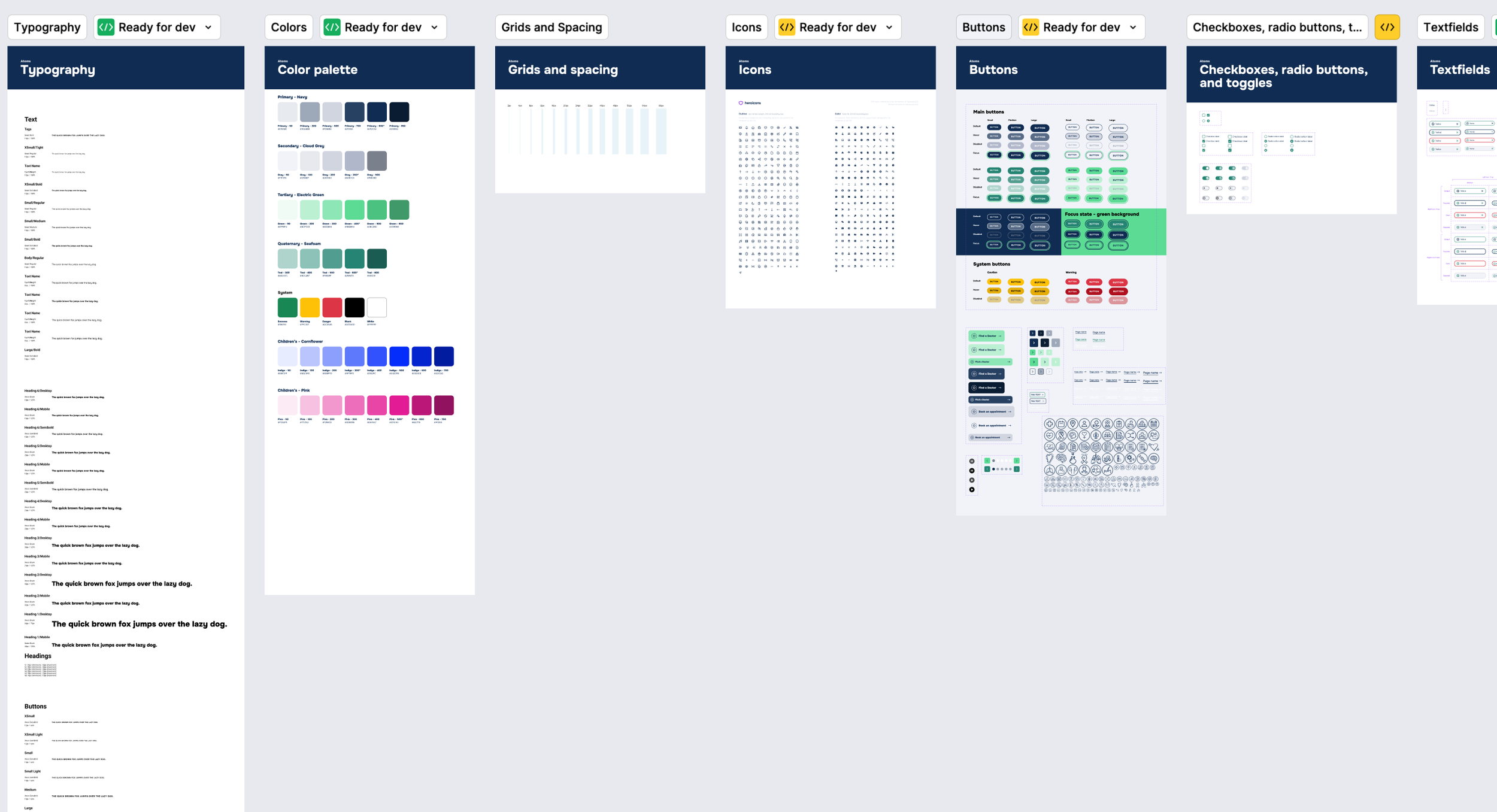
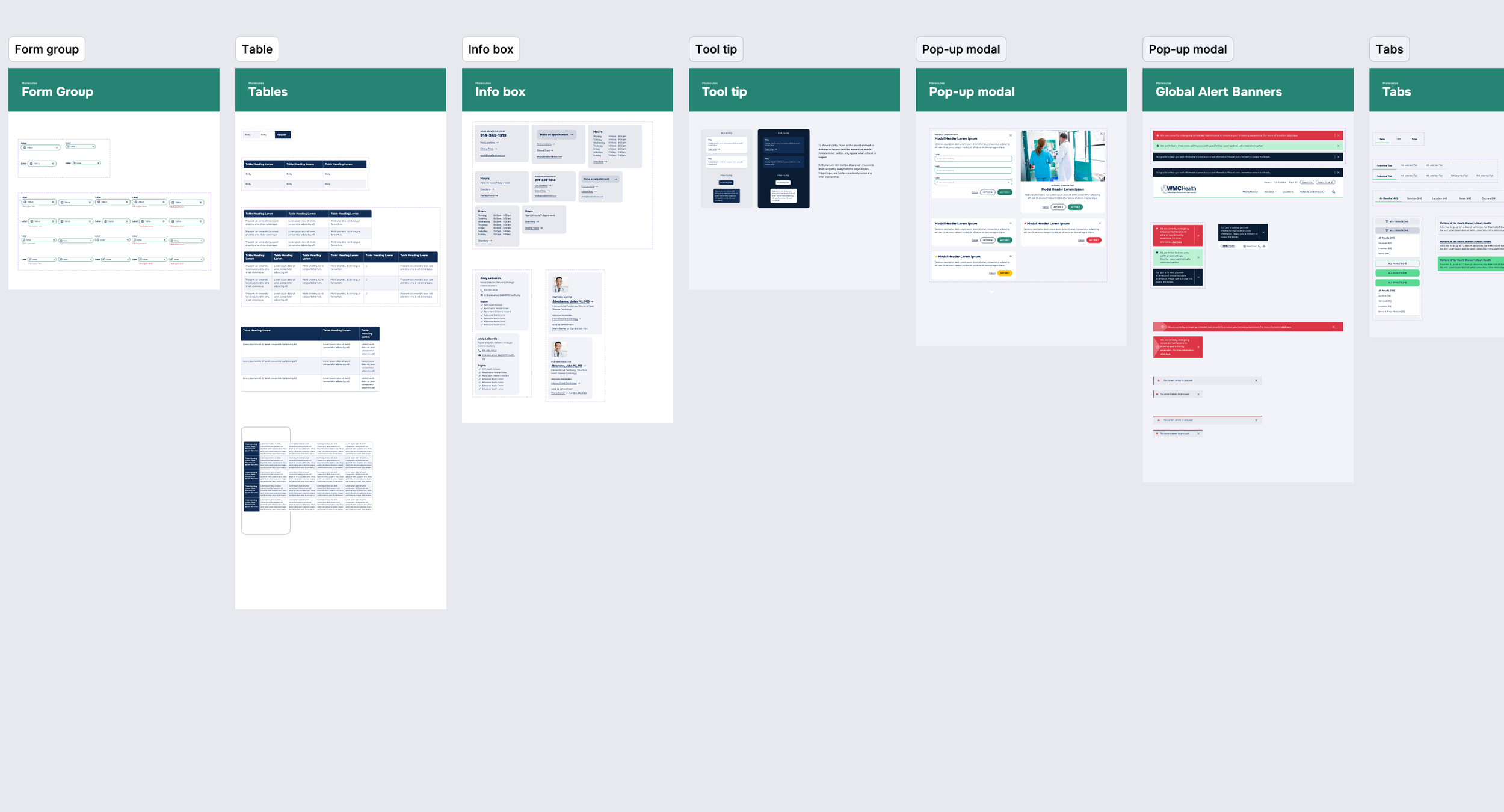
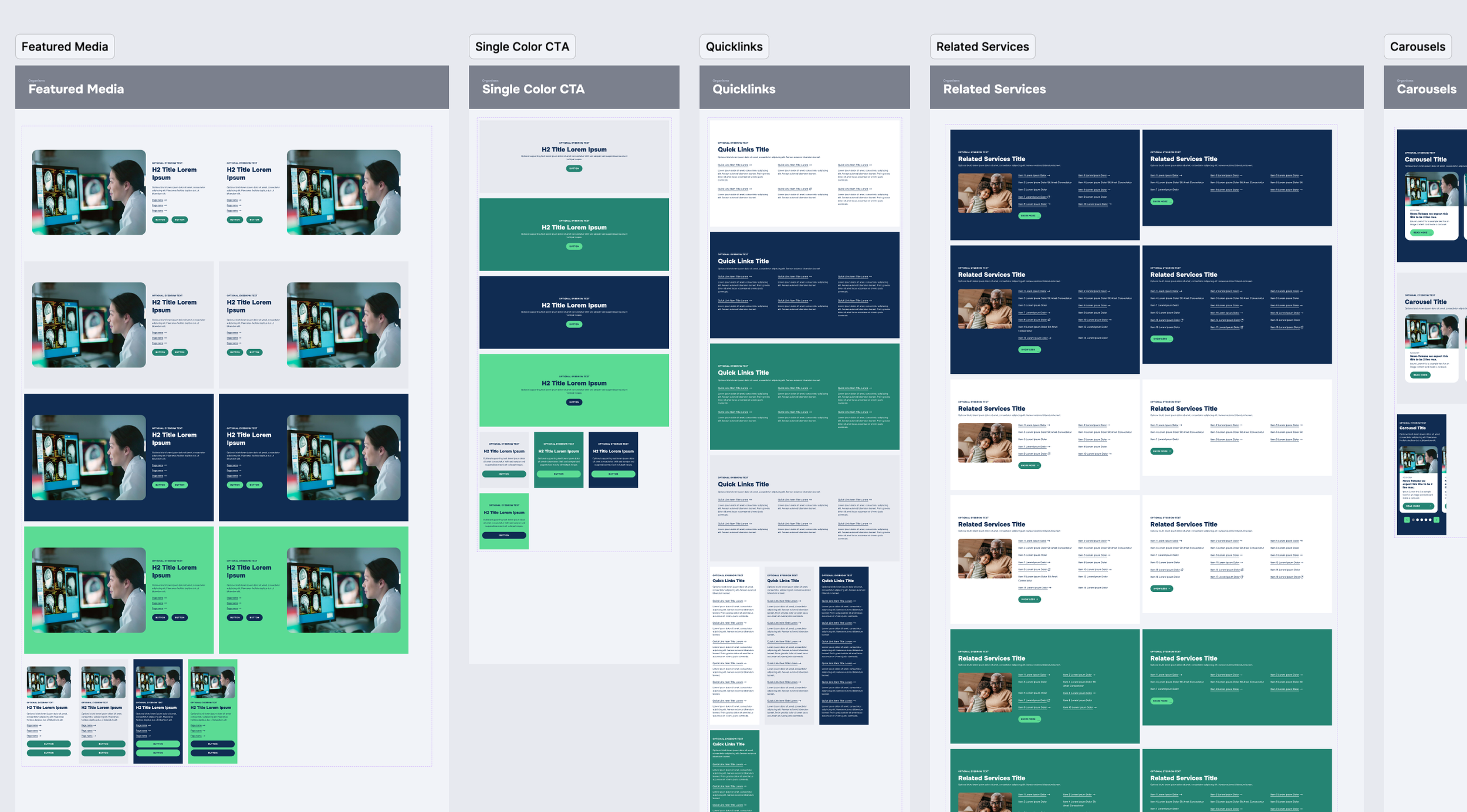
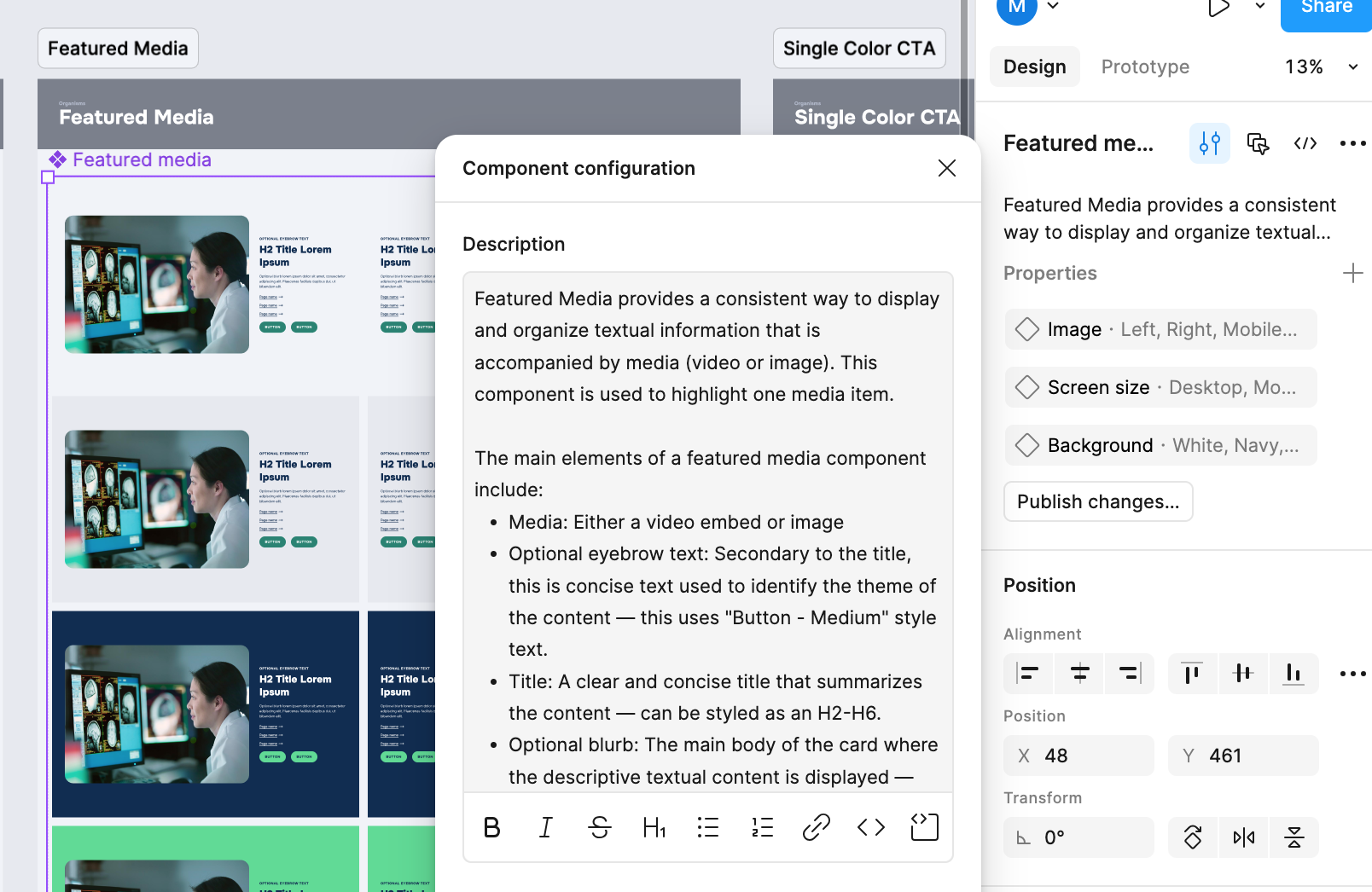
An example of my team’s documentation inside the Figma file to aid in quick development and QA.
Outcome
The redesigned WMCHealth website offers a more cohesive and user-friendly experience, with a scalable design system that supports future growth and their future brand-wide redesign. The improved UI enhances accessibility and engagement, creating a seamless experience for both patients and healthcare professionals.