MU Health
Using behavioral data and user research to uncover opportunities for a more intuitive digital experience
My Role
UX/UI Director
Scope
UX Research
Personas
Journey Maps
The Challenge
The University of Missouri School of Medicine serves a wide range of audiences, from prospective medical students and residents to research faculty, alumni, and donors. Each group comes to the website with different needs, expectations, and goals.
Understanding how these audiences navigated the existing website was essential to identifying opportunities for improvement. The challenge was to move beyond assumptions about what users needed and develop an evidence-based understanding of where the digital experience was falling short.
The Approach
We analyzed website analytics, including traffic patterns, high-performing pages, and drop-off points, alongside an on-site user survey to understand visitors' needs and frustrations. We also conducted a competitive analysis and evaluated the website against established UX heuristics and best practices.
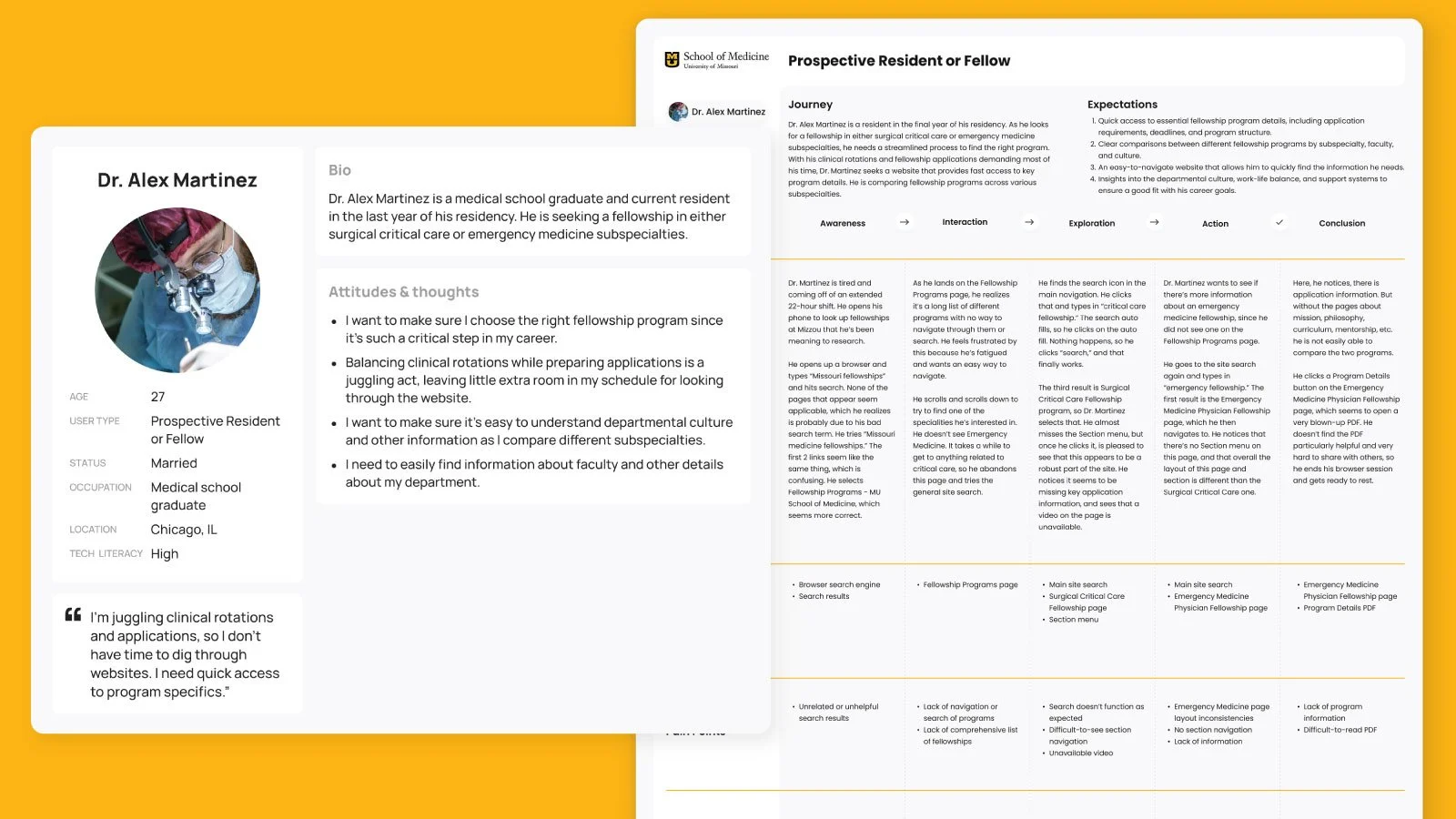
Using these findings, we developed eight user personas representing the School of Medicine's primary audiences. Each persona was paired with a journey map documenting user actions, touchpoints, pain points, and emotional experiences while navigating the existing website.
The Results
Our research revealed recurring issues with content discoverability, confusing navigation, ineffective search functionality, and fragmented experiences across multiple university websites. Often, the information users needed existed but was difficult to locate.
The eight personas and journey maps gave stakeholders a clearer understanding of their audiences' distinct needs and established a research-based foundation for improving information architecture, content organization, and the overall user experience.
Translating research into user journeys
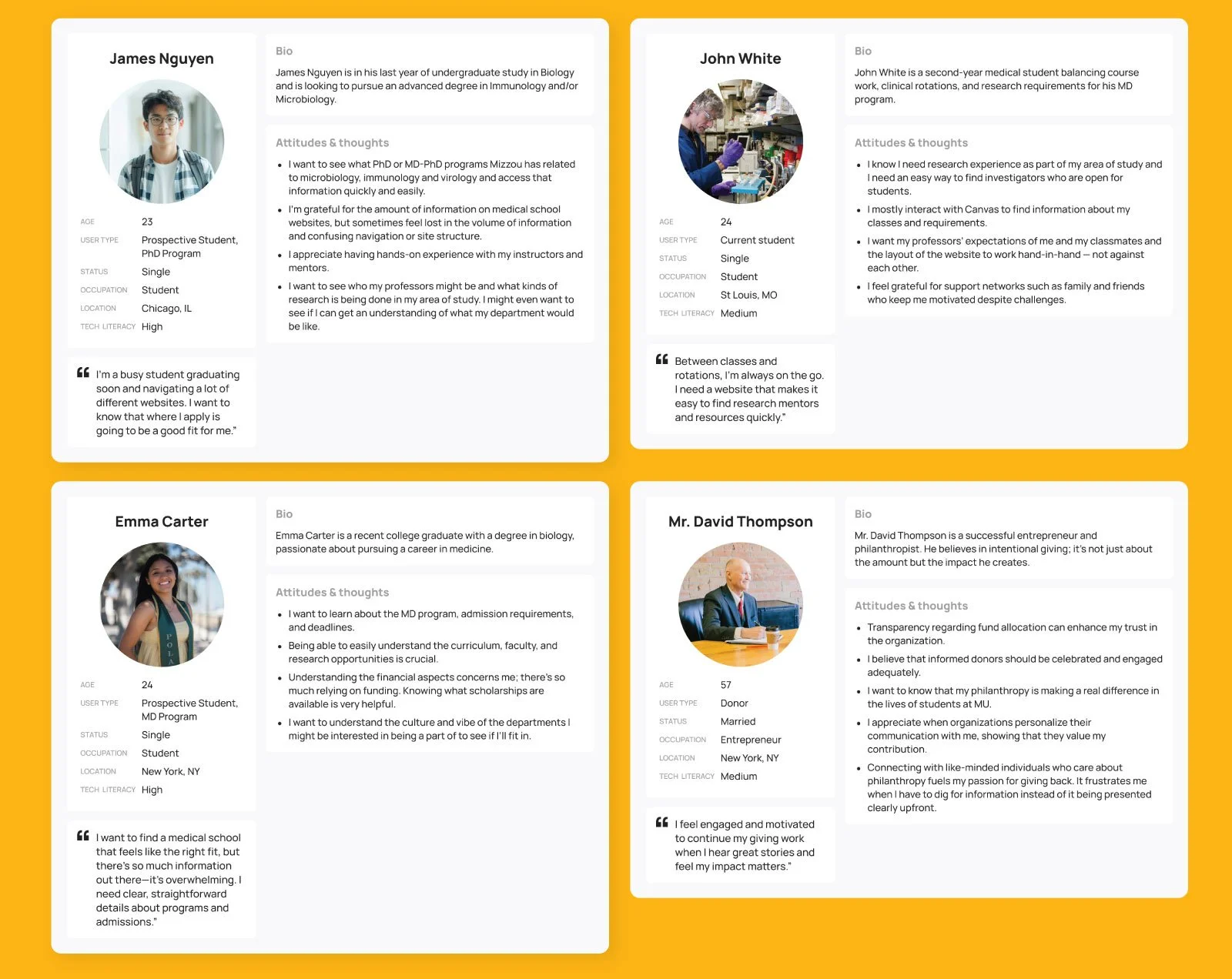
We developed eight audience personas representing the School of Medicine's diverse user groups, including prospective students, current students, residents, faculty, alumni, and donors.
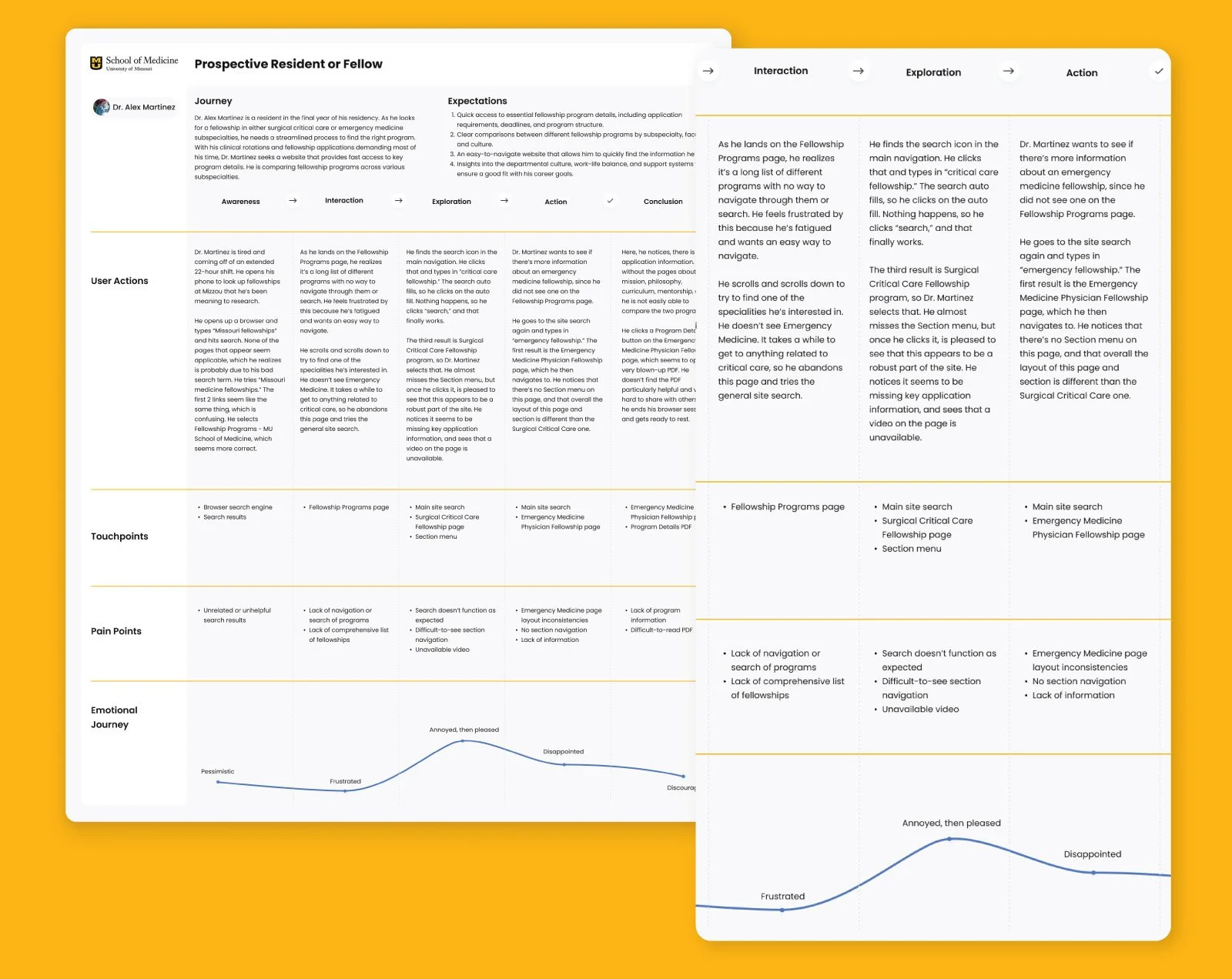
Each persona was paired with a detailed journey map documenting how that audience might navigate the existing website to accomplish a specific goal.
Rather than simply describing users' needs, journey maps illustrated the actual points of friction in the experience, including confusing navigation, unsuccessful searches, unexpected transitions between websites, and difficulty locating essential information.
The maps also documented touchpoints, user expectations, and emotional responses, making it easier to connect individual usability issues to broader problems with the website's information architecture and content strategy.
Turning Insights into Action
Our research directly informed a new navigation structure and content strategy built around the needs and priorities of the School of Medicine's audiences. We recommended a more intuitive information architecture, deeper interlinking between related content, and greater use of video to communicate information that users wanted but struggled to find.
These recommendations shifted the website strategy away from an institution-centered approach toward one that prioritized what users actually wanted to know and accomplish. The personas and journey maps provided a research-backed foundation for making content more relevant, accessible, and easier to navigate.